Walk down the stalls and read the nameplates. Every horse carries a story millions of years long, and the breeds of India carry some of the proudest chapters.
Fifty-five million years in four steps Fact
The story starts around 55 million years ago with Eohippus, also called Hyracotherium. It was a small forest animal, roughly the size of a fox, with four toes on its front feet and three on the back. It browsed on soft leaves.
As forests gave way to grasslands, its descendants grew taller and faster. Mesohippus walked on three toes. Merychippus became a grazer and ran mainly on its strong middle toe.
Around four million years ago, the genus Equus appeared in North America. From there, horses crossed the Bering land bridge into Asia, Europe and Africa.
Horses then died out in the Americas at the end of the last Ice Age. They returned only when Spanish ships brought them back in the 1500s.
Hot, warm and cold: how breeds are grouped Fact
Hot-bloods such as the Arabian and the Thoroughbred are spirited, sensitive and fast. Cold-bloods are the calm, heavy draught horses, such as the Shire, the Clydesdale and the Percheron.
Warmbloods are a blend of the two, bred for athletic sport. Hanoverians, Dutch Warmbloods (KWPN), Holsteiners and the Selle Français dominate today’s show jumping and dressage arenas.
Worldwide there are hundreds of horse and pony breeds, commonly estimated at more than 350.
India’s own breeds Fact
India’s indigenous breeds are recognised by ICAR’s National Bureau of Animal Genetic Resources. They include the Marwari, Kathiawari, Manipuri, Spiti, Zanskari, Bhutia and the Kachchhi-Sindhi.
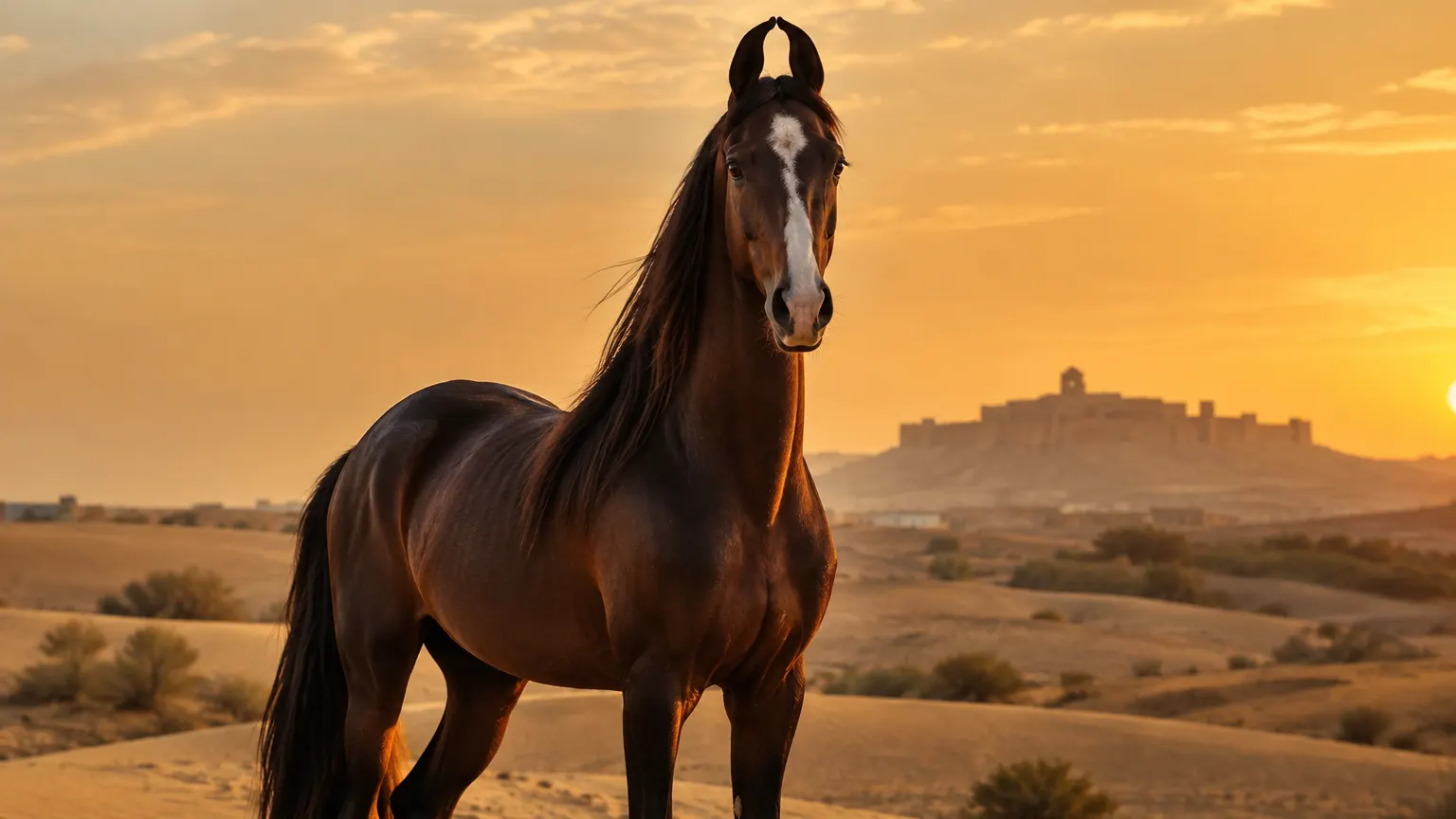
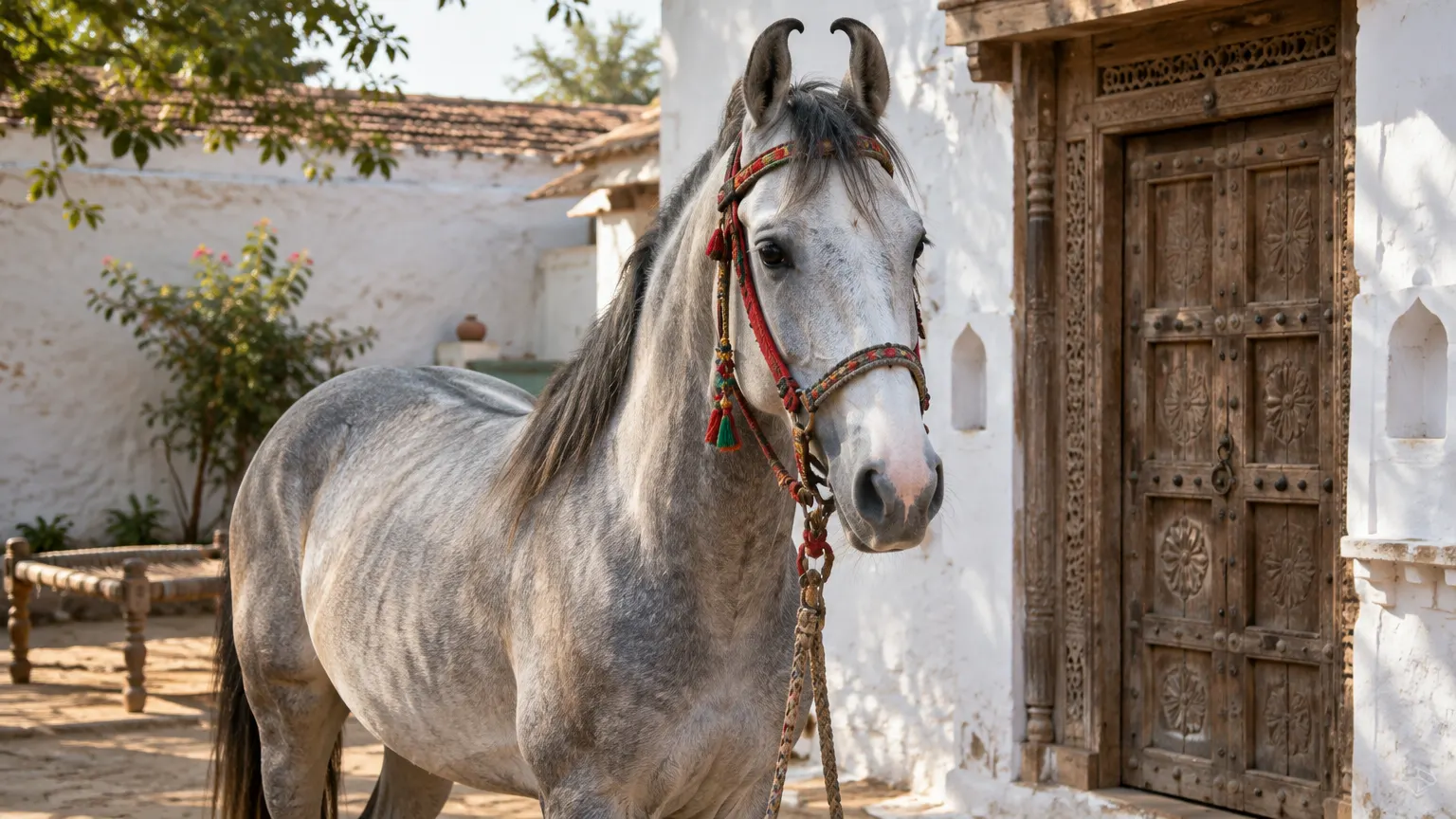
The Marwari of Rajasthan is instantly recognisable by its inward-curving ears, which can touch at the tips. It was bred for courage and endurance by the Rathore rulers of Marwar.
The Kathiawari of Saurashtra in Gujarat shares the curved ears. It is famous for agility, loyalty and hardiness in heat.
The Manipuri pony is small, quick and brave. It is the original polo pony, the horse of Sagol Kangjei, the game the world now calls polo.
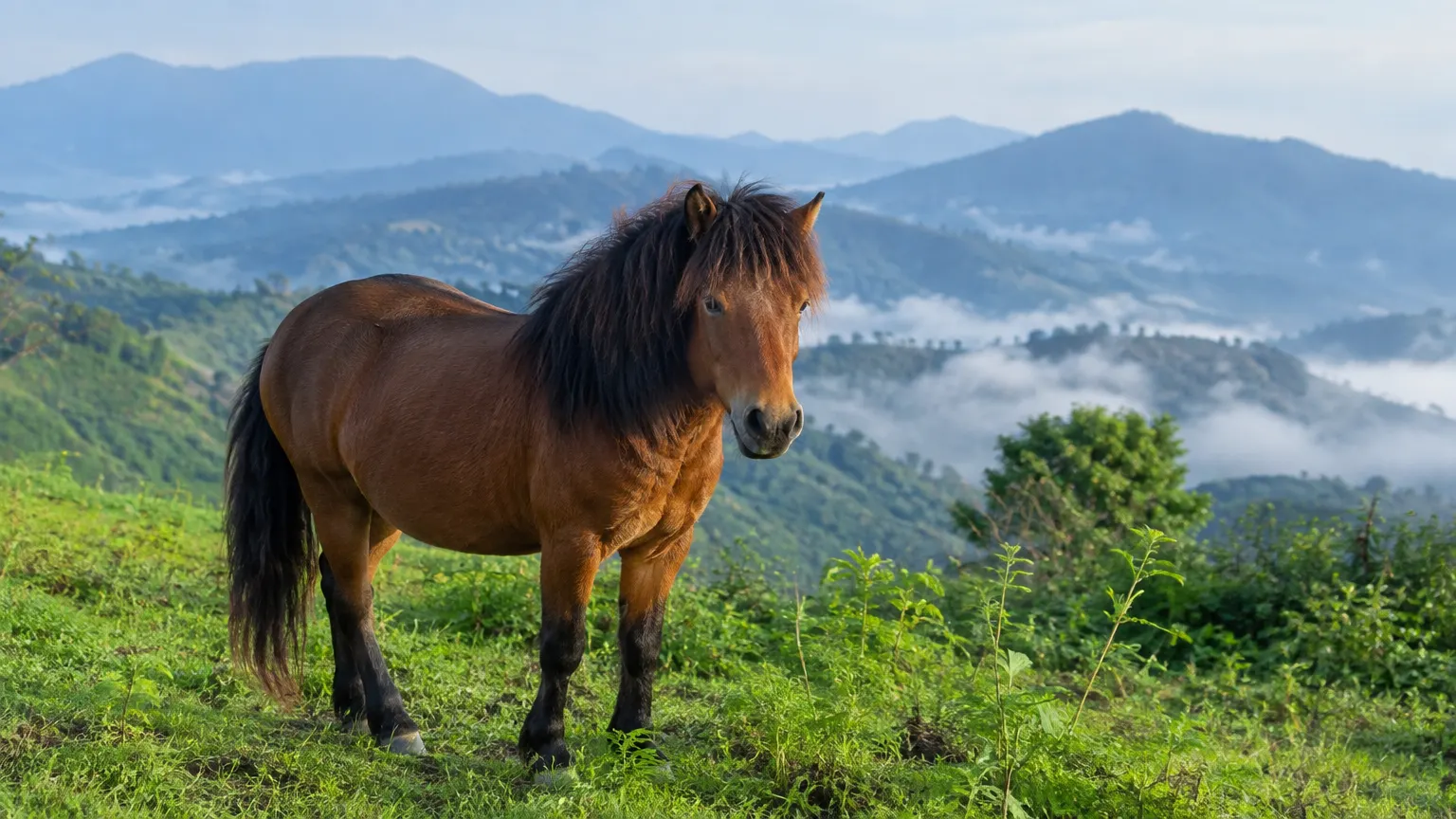
In the mountains, the Spiti (Himachal Pradesh), the Zanskari (Ladakh) and the Bhutia (Sikkim and the Darjeeling hills) are tough, sure-footed hill ponies, built for thin air and steep paths.
The Kachchhi-Sindhi of the Kutch region is a hardy desert horse, recognised more recently as a distinct breed.
A breed under pressure Fact
India’s horse population has been falling. The 20th Livestock Census (2019) counted roughly 3.4 lakh horses and ponies, a sharp drop from the previous census. Breed societies and enthusiasts are now working hard to protect the Marwari, the Kathiawari and the rare hill breeds.
World icons you should know Fact
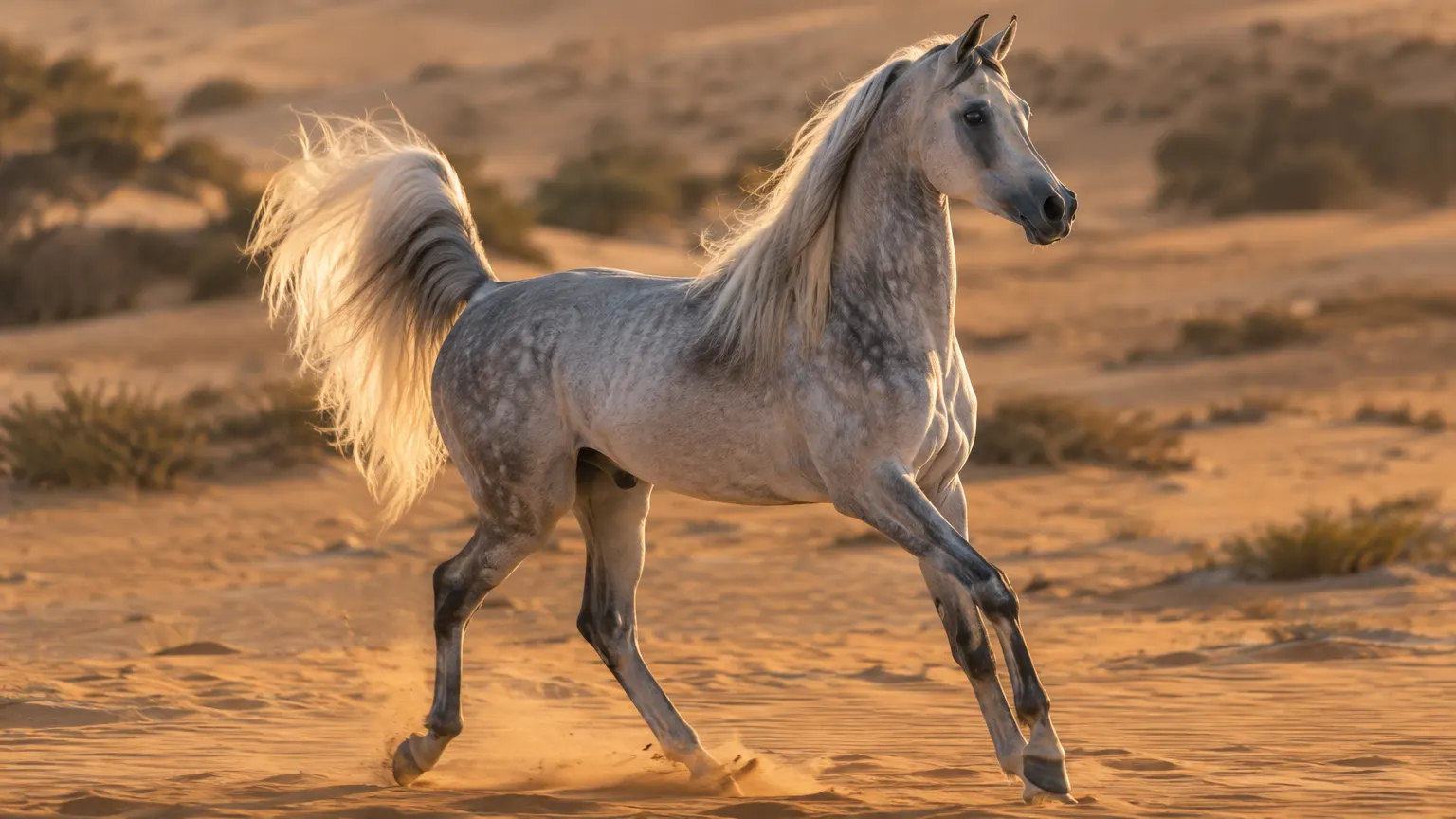
The Arabian is one of the oldest breeds, prized for stamina and beauty, and is the king of endurance riding. The Thoroughbred was developed in England for racing.
The American Quarter Horse, named for its speed over a quarter mile, is the star of Western riding. The Andalusian of Spain and the black Friesian of the Netherlands are prized for their elegance.
The Akhal-Teke of Turkmenistan is famous for its shimmering, metallic-looking coat.
Fun facts
Marwari ear tips can touch each other, and like all horses, each ear can swivel on its own.
Every racing Thoroughbred in the world traces back to three foundation stallions of the 1700s.
Ponies are not baby horses. They are fully grown animals under 14.2 hands.
In Imphal, polo is still played at the Mapal Kangjeibung, regarded as one of the oldest polo grounds in the world.
Questions people ask
Which horse breeds are native to India?
Recognised Indian breeds include the Marwari, Kathiawari, Manipuri, Spiti, Zanskari, Bhutia and Kachchhi-Sindhi.
Why do Marwari horses have curved ears?
The inward-curving ears are a defining trait of the breed, preserved over centuries by careful breeding in Rajasthan.
What is a warmblood horse?
A warmblood is a sport horse bred by combining hot-blooded and cold-blooded lines. Warmbloods dominate Olympic show jumping and dressage.
How did horses evolve?
From the small, multi-toed Eohippus around 55 million years ago, through species such as Mesohippus and Merychippus, to the one-toed genus Equus about four million years ago.
Sources & further reading
- ICAR–National Bureau of Animal Genetic Resources: registered breeds of India
- Government of India, Department of Animal Husbandry & Dairying: 20th Livestock Census (2019)
- MacFadden, B. J., “Fossil Horses” (Cambridge University Press)
- Encyclopaedia Britannica: horse evolution; horse breeds
Last reviewed: November 2026. Spotted an error? Suggest a correction.