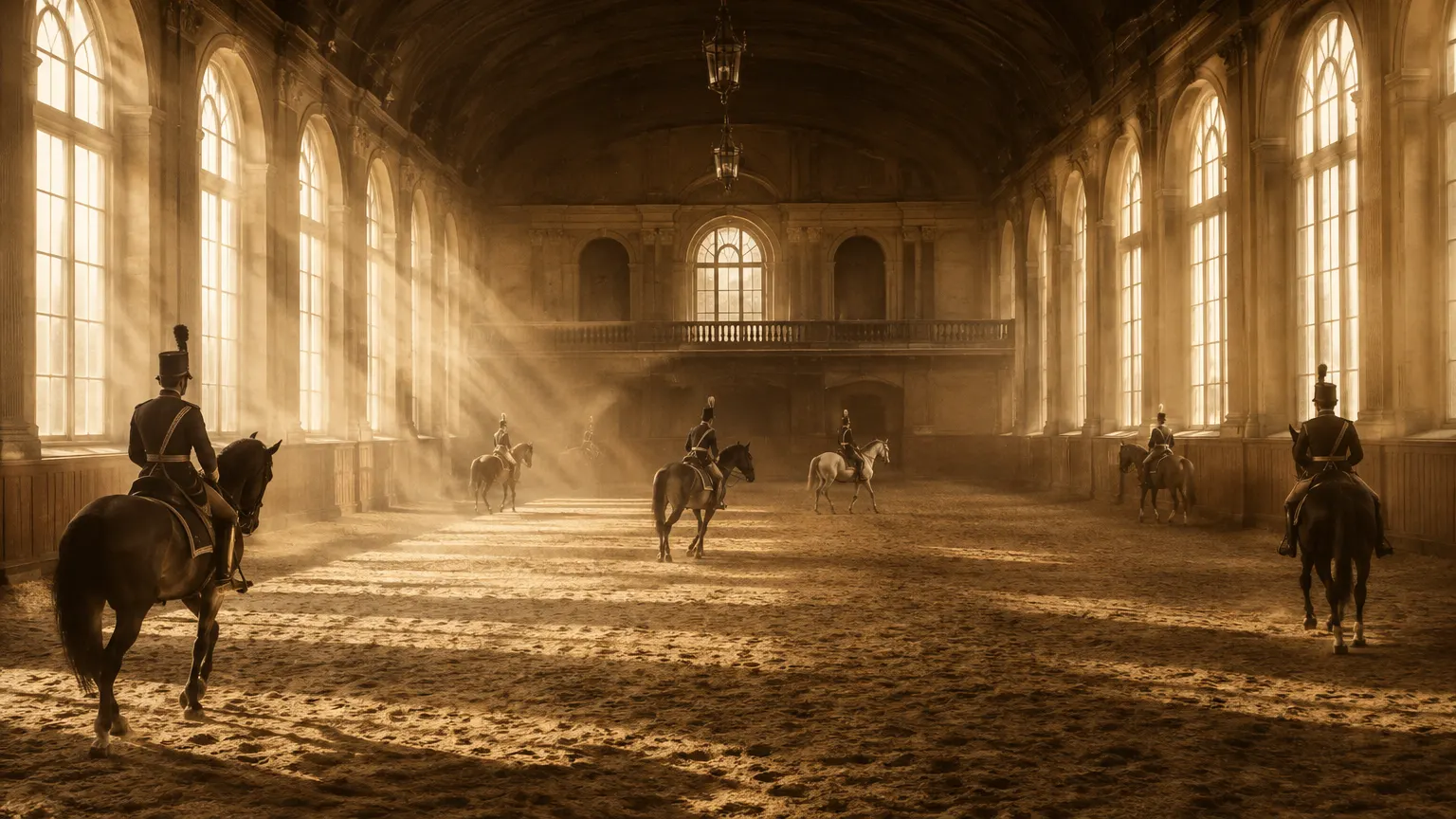
Every equestrian sport began as a real-life skill, whether a soldier’s test, a hunter’s leap or a herder’s turn. Step into the old cavalry school and see how training became sport.
Ancient games Fact
The ancient Greek Olympic Games added four-horse chariot racing in 680 BCE, and a mounted horse race soon after. Chariot racing later became the great passion of Rome, at the Circus Maximus.
Around 350 BCE, the Greek soldier and writer Xenophon wrote On Horsemanship, the oldest complete work on riding that survives. His advice to train horses with patience and reward still guides classical dressage today.
The riding academies of Europe Fact
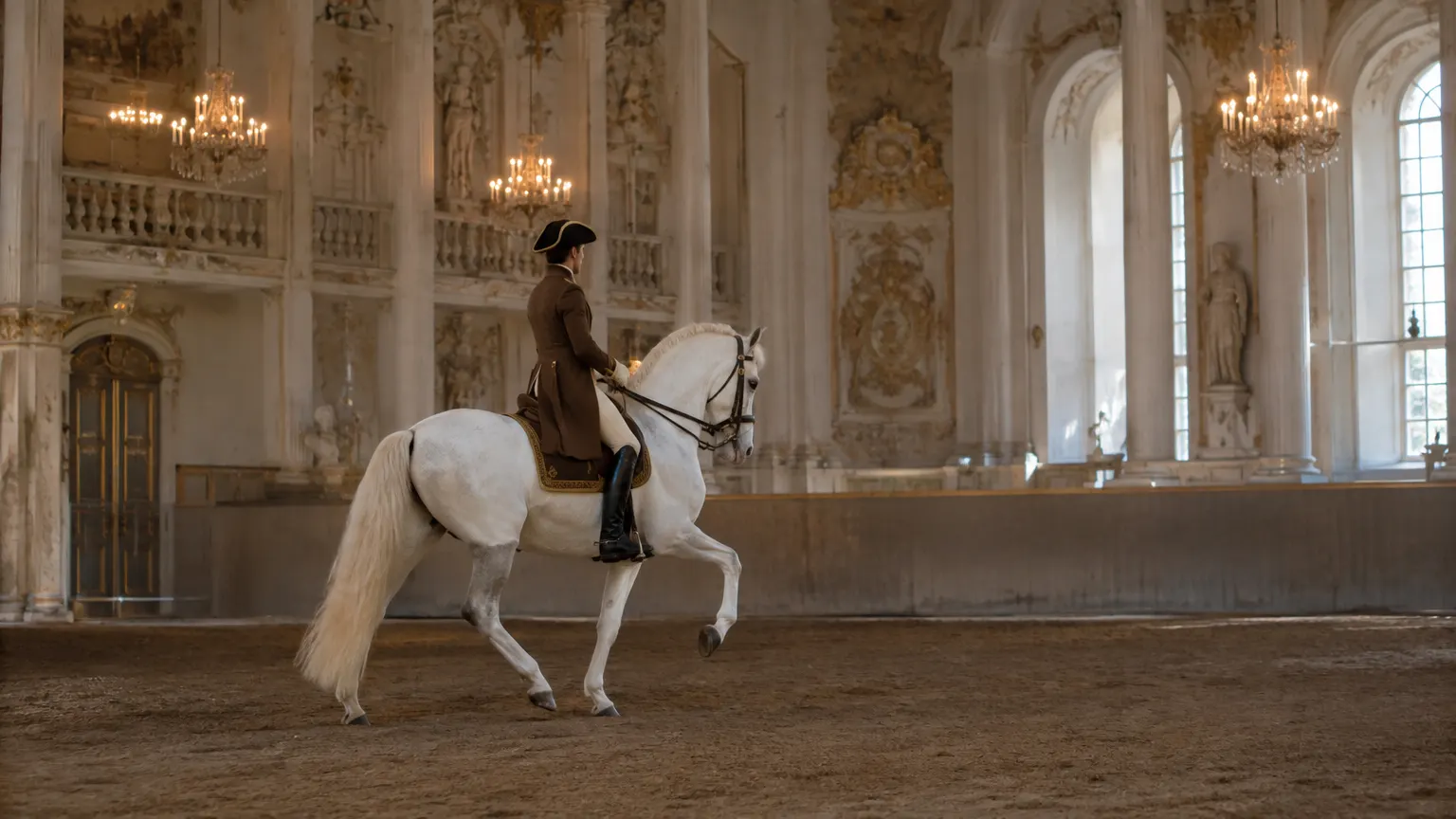
In Renaissance Italy, riding masters in Naples turned horsemanship into an art for nobles. The style spread across Europe.
The Spanish Riding School of Vienna, first recorded in 1565, still performs classical dressage with its white Lipizzaner horses, and its tradition is recognised by UNESCO.
Hunting, hedges and the birth of jumping Fact
When fields in Britain and Ireland were fenced and hedged in the 18th and 19th centuries, riders following the hunt had to jump. This led to steeplechasing, races from one church steeple to the next across country.
By the late 1800s, horse shows in Ireland, France and England were holding “leaping” contests over fences. These became modern show jumping.
The cavalry schools Fact
Military riding schools such as Saumur in France and Pinerolo in Italy trained officers to ride across any terrain. Around 1900, the Italian officer Federico Caprilli developed the “forward seat”, in which the rider leans forward over a jump instead of back. Every jumping rider in the world still uses it.
Eventing began as a test of cavalry horses: obedience on the parade ground, courage across country and fitness for the next day. That is why early Olympic eventing was simply called “the Military”.
Into the Olympic Games Fact
Show jumping first appeared at the Paris Olympics in 1900. From Stockholm 1912 onwards, dressage, eventing and jumping have been Olympic sports. For decades only military officers could compete in most of them.
At Helsinki in 1952, civilians and women were admitted to dressage. Denmark’s Lis Hartel, partly paralysed by polio, won a silver medal.
The international governing body, the Fédération Équestre Internationale (FEI), was founded in 1921. Equestrian sport remains one of the very few Olympic sports where men and women compete against each other as equals.
India’s gift to the world: polo Fact
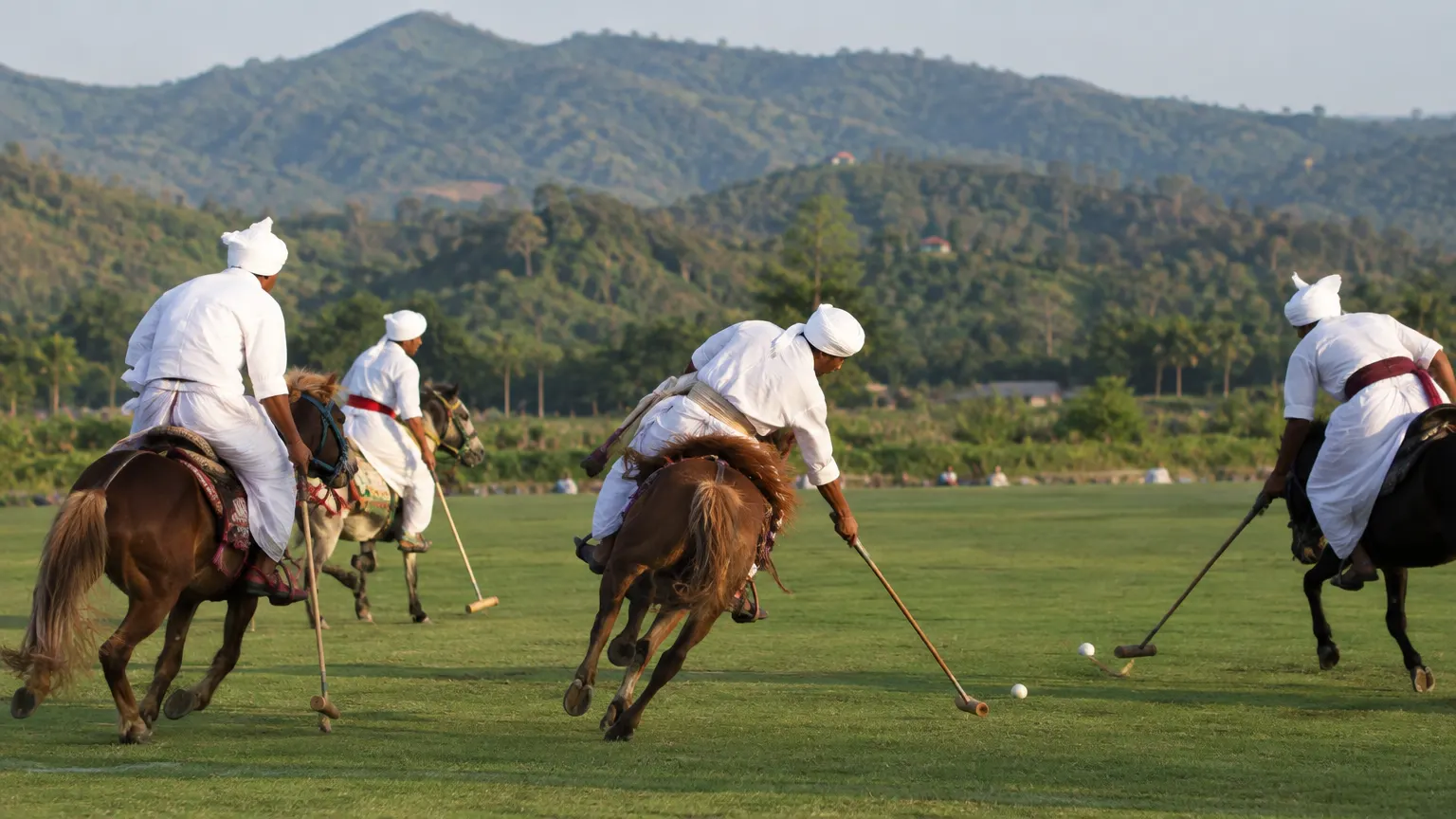
Polo, called Sagol Kangjei in Manipur, has been played there for centuries on the hardy Manipuri pony. British tea planters saw the game in the 1850s, and the world’s first modern polo club was founded at Silchar, Assam, in 1859.
The Calcutta Polo Club, founded in 1862, is regarded as the oldest polo club still in existence. From India, polo travelled to England, Argentina and the rest of the world.
Tent pegging: a cavalry skill Fact
In tent pegging, a rider at full gallop spears a small wooden peg out of the ground with a lance or sword. It grew from cavalry training on the Indian subcontinent and is still loved in India, where riders compete internationally and on home ground.
Fun facts
Equestrian is one of the only Olympic sports in which a human and an animal compete together as a team.
Steeplechase gets its name from racing towards church steeples, the tallest landmarks in the countryside.
Canada’s show jumper Ian Millar competed at ten Olympic Games, a record for any athlete in any sport.
Questions people ask
When did equestrian sport join the Olympics?
Show jumping appeared in 1900, and dressage, eventing and jumping have been part of every Games since 1912.
Where did polo originate?
Modern polo grew from Sagol Kangjei, played in Manipur. The first modern polo club was founded at Silchar, Assam, in 1859.
What is the FEI?
The Fédération Équestre Internationale, founded in 1921, is the world governing body for Olympic equestrian sports.
Sources & further reading
- Fédération Équestre Internationale (FEI): history
- International Olympic Committee: equestrian at the Olympic Games
- Xenophon, “On Horsemanship” (trans. H. G. Dakyns)
- Hurlingham Polo Association and Calcutta Polo Club: history of polo
Last reviewed: November 2026. Spotted an error? Suggest a correction.