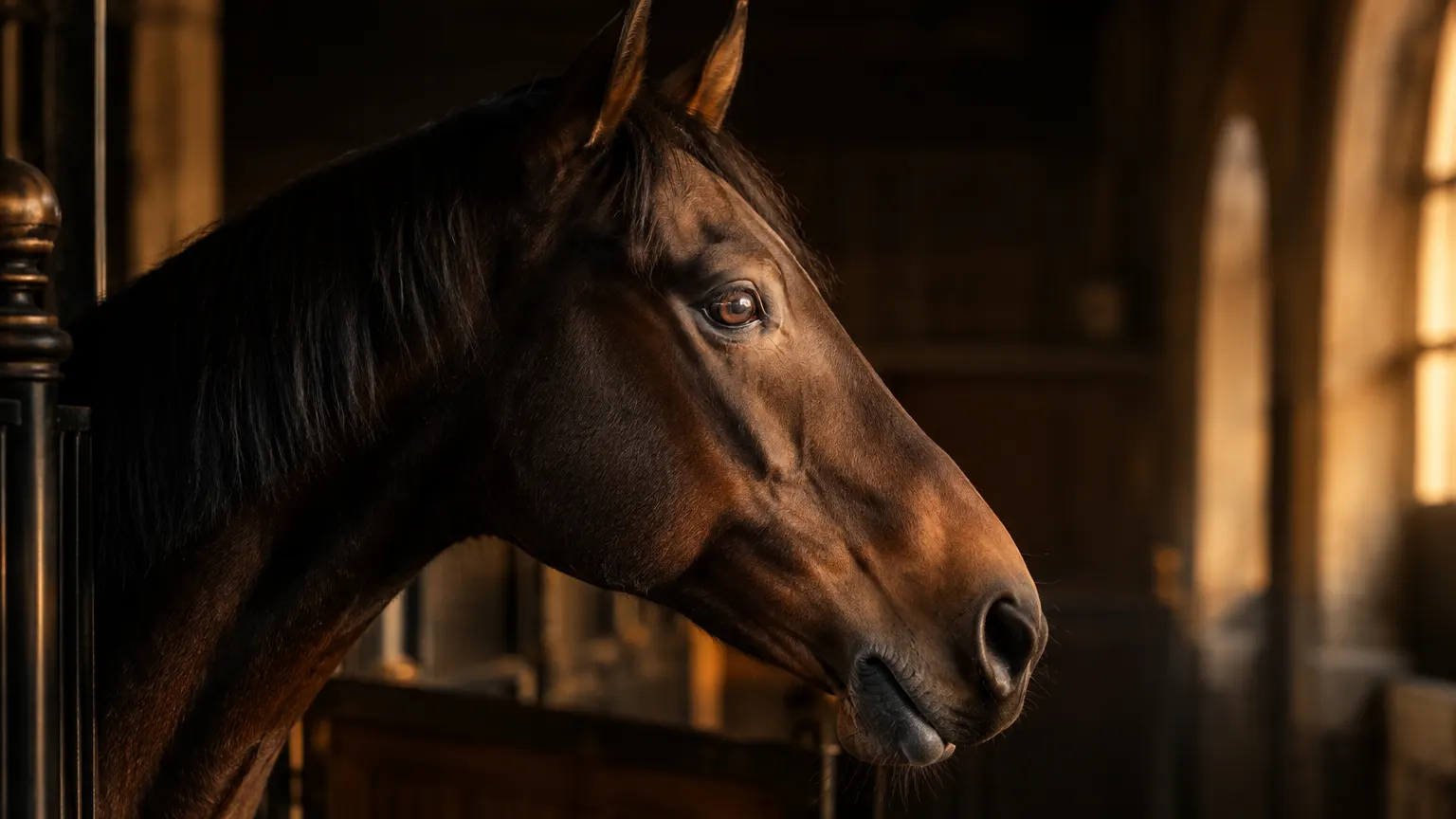
Before we ride, we must understand. The horse is a prey animal with the heart of an athlete, the memory of an elephant and senses tuned for survival. This is where every rider’s journey begins.
Its place in the animal kingdom Fact
Scientists place the domestic horse in a neat family tree. It belongs to the kingdom Animalia, the phylum Chordata and the class Mammalia. It sits in the order Perissodactyla, the odd-toed hoofed animals, which it shares with rhinos and tapirs.
Its family is Equidae and its genus is Equus. The domestic horse is usually written as Equus ferus caballus, and some scientists simply use Equus caballus.
The horse’s closest living relatives are donkeys, zebras and wild asses. India is home to one of them: the Indian wild ass, or khur, which still roams the Little Rann of Kutch in Gujarat.
Built to run Fact
A horse walks on the tip of a single toe on each leg. Its hoof is a hard, nail-like shell around that toe. Over millions of years, this one-toed design turned the horse into one of nature’s finest long-distance runners.
An adult horse has around 205 bones. Its large heart and lungs let it gallop at speeds of about 45–55 km per hour, and racehorses can go faster over short distances.
Horses can doze standing up. A clever locking system in their legs, called the stay apparatus, holds them upright while their muscles rest. For deep sleep, though, they still need to lie down for short periods.
How a horse sees, hears and feels Fact
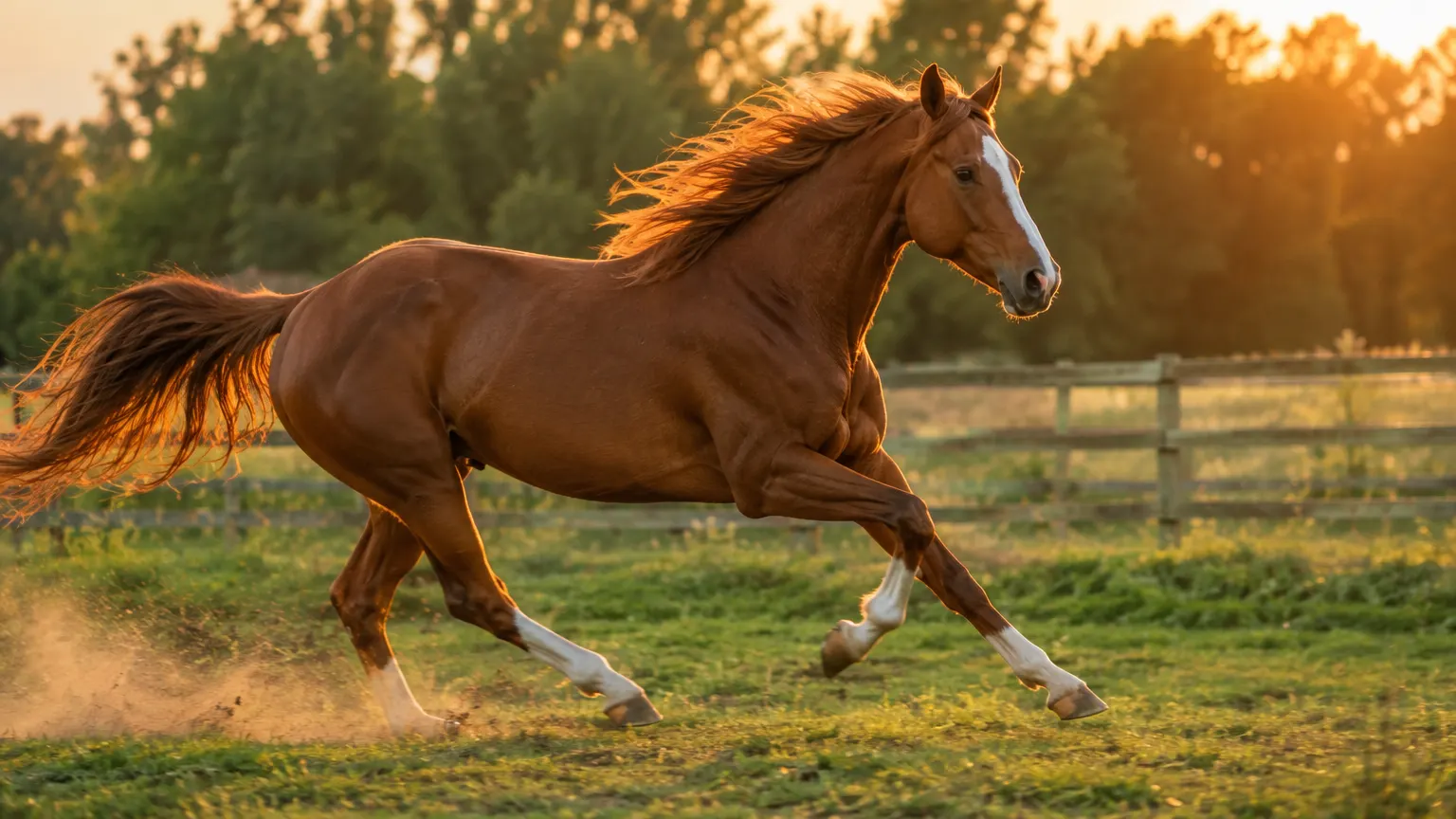
Horses have the largest eyes of any land mammal. Set on the sides of the head, they give an almost all-round view, with two blind spots: directly in front of the nose and directly behind the tail. This is why riders are taught never to approach a horse from straight behind.
A horse’s ears can swivel independently and point towards sounds. Watching the ears is the simplest way to read a horse’s mood: forward means interest, pinned flat back means warning.
Their skin is so sensitive that a horse can feel a single fly land on its coat. That same sensitivity lets a trained horse respond to the lightest touch of a rider’s leg.
Life cycle and daily needs Fact
A mare carries her foal for about eleven months. Within an hour or two of birth, a healthy foal is usually standing and feeding. Horses commonly live 25 to 30 years, and some live longer with good care.
Horses are grazing animals with small stomachs, built to eat little and often for most of the day. They cannot vomit, which is why careful feeding matters so much to every good stable.
Horse height is measured in hands. One hand equals four inches, about 10.16 cm, measured from the ground to the top of the shoulders, called the withers. A horse under 14.2 hands is usually called a pony.
The natural gaits Fact
Every horse has four natural gaits. The walk has four beats, the trot two, the canter three, and the gallop, the fastest, four.
Some Indian breeds have something extra. Many Marwari and Kathiawari horses can perform the revaal, a smooth, ambling gait that is wonderfully comfortable on long journeys and still prized by horse lovers in Rajasthan and Gujarat.
The horse in Indian imagination Legend
In Hindu tradition, Uchchaihshravas, a radiant seven-headed white horse, is said to have risen from the churning of the cosmic ocean, the Samudra Manthan. Surya, the sun god, is pictured driving a chariot pulled by seven horses across the sky.
Kalki, the prophesied final avatar of Vishnu, is described arriving on a white horse. Buddhist tradition remembers Kanthaka, the beloved white horse that carried Prince Siddhartha away from palace life on the night he renounced the world.
A ritual of kings Fact
Ancient Indian texts describe the Ashvamedha, a grand royal ritual in which a consecrated horse was allowed to wander freely for a year. Kingdoms that let it pass accepted the king’s authority. It shows how closely the horse was tied to power and sovereignty in early India.
Horses across world cultures Legend
Greek myth gave us Pegasus, the winged horse. Norse legend tells of Sleipnir, Odin’s eight-legged steed. In the Chinese zodiac, people born in the Year of the Horse are said to be energetic and free-spirited. In Mongolia, horse culture is so deep that a common greeting asks whether your horses are fat and healthy.
Fun facts
Horses can’t breathe through their mouths. They breathe only through their noses.
A horse’s teeth take up more space in its head than its brain does.
Foals are born with soft, rubbery caps on their hooves (often called “golden slippers”) to protect their mother before birth.
Horses recognise human facial expressions and remember people who treated them kindly.
Questions people ask
What is the scientific name of the horse?
The domestic horse is usually called Equus ferus caballus. Some scientists simply use Equus caballus. It belongs to the family Equidae, along with donkeys and zebras.
How long do horses live?
Horses commonly live 25 to 30 years. With good care, many live into their thirties.
Do horses sleep standing up?
They can doze standing up thanks to the stay apparatus in their legs. For deep sleep they lie down, usually for short periods.
What is a hand in horse measurement?
A hand is four inches (about 10.16 cm). Height is measured from the ground to the withers, the top of the shoulders.
Sources & further reading
- Integrated Taxonomic Information System (ITIS): Equus ferus caballus
- The Merck Veterinary Manual: horse anatomy and physiology
- Gujarat Forest Department: Wild Ass Sanctuary, Little Rann of Kutch
- Classical Sanskrit and Pali texts as retold in standard encyclopaedias of Indian mythology
Last reviewed: November 2026. Spotted an error? Suggest a correction.