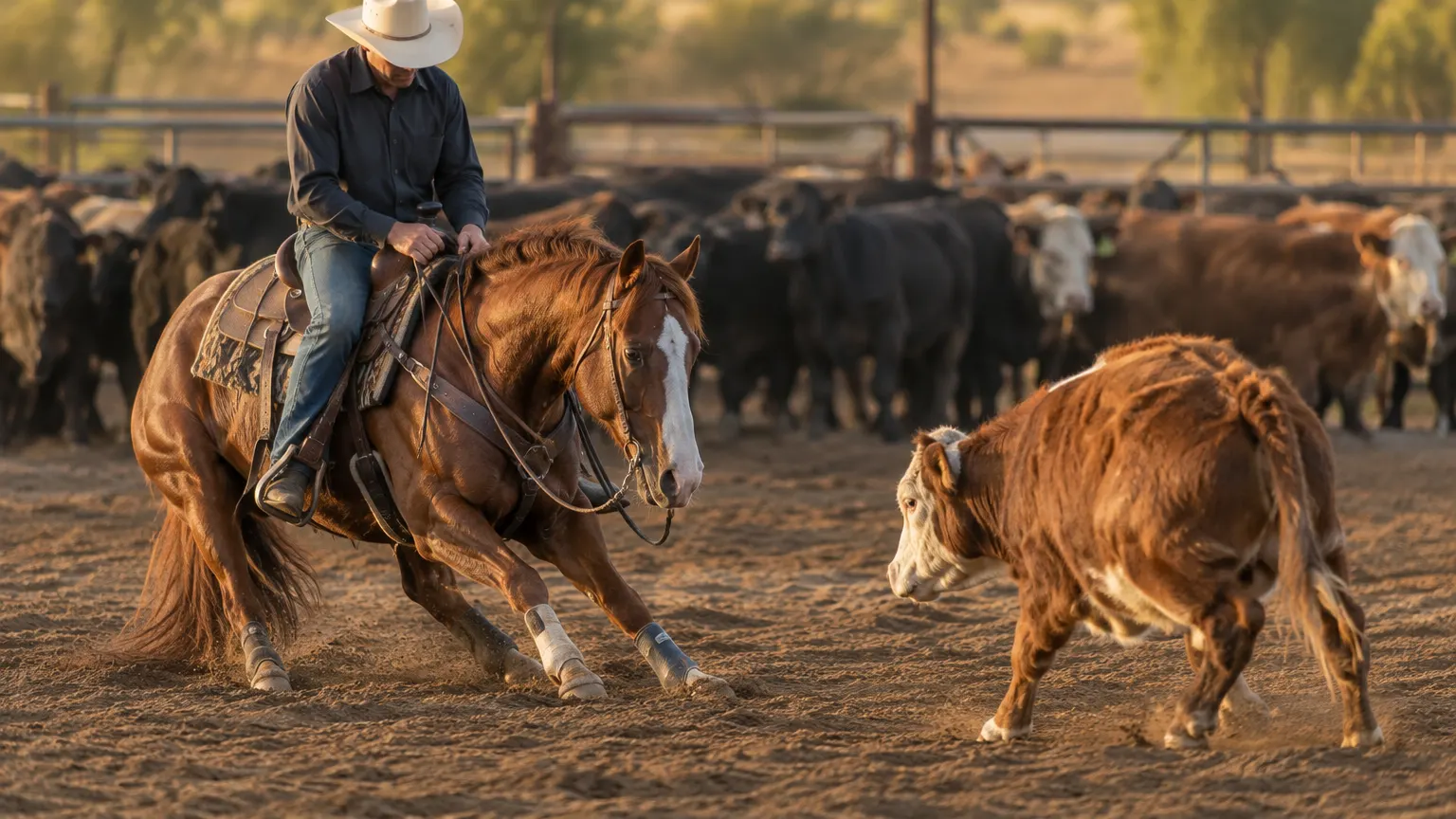
What is cutting?
In cutting, the rider eases one calf away from a small herd. The horse must then stop the calf from running back, moving left and right like a goalkeeper.
Once the calf is separated, the rider loosens the reins and the horse works on its own. That is what makes cutting so remarkable.
Popularity
A ranch-country tradition in the USA, Canada, Australia and Brazil. Virtually unknown in India.
Feel the sport
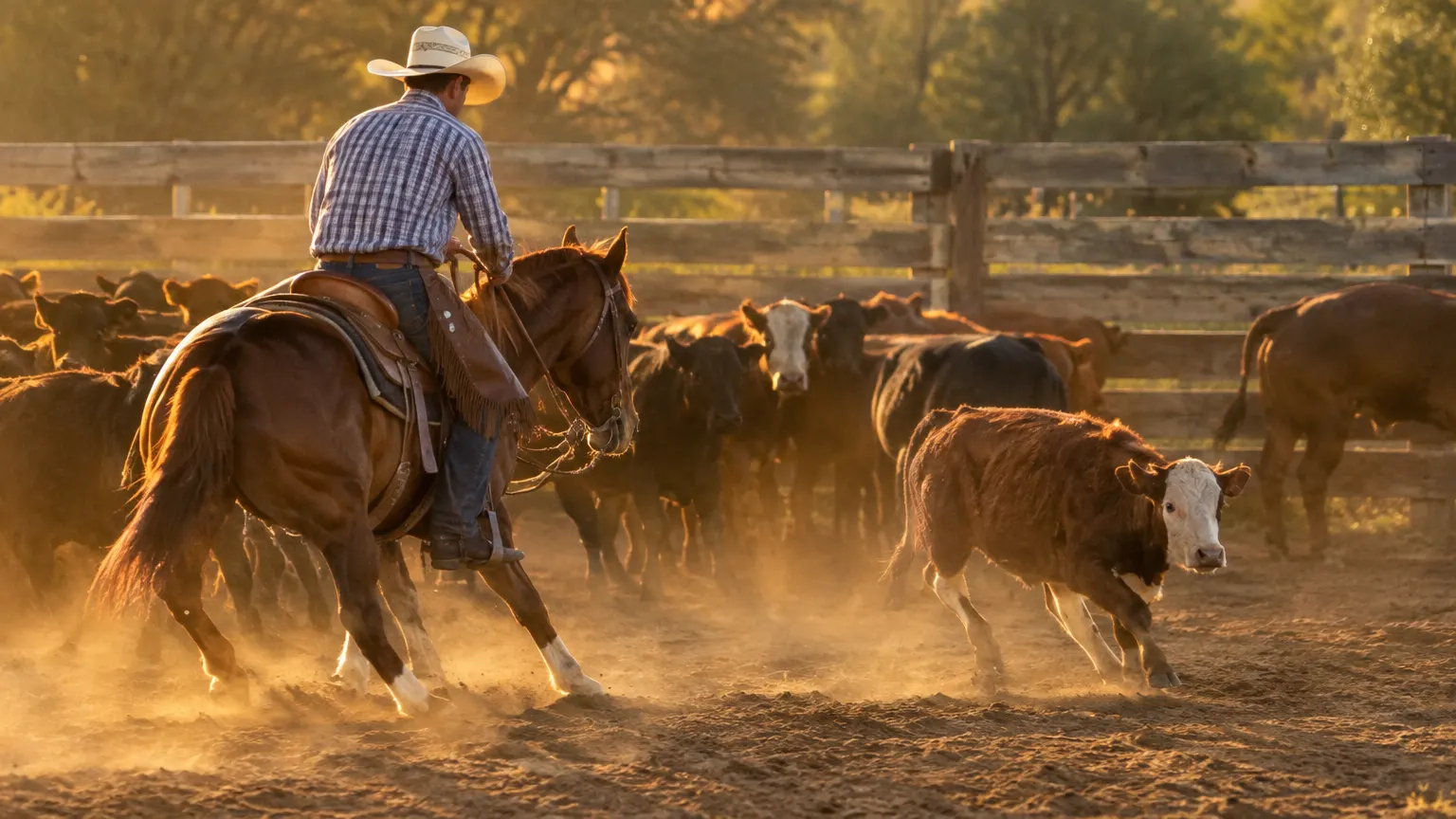
Low, quick and electric: the horse mirrors every move of the calf, eyes locked, as if playing chess at speed.
An Indian Parallel Fact
India’s pastoral communities have moved herds for thousands of years, and in Saurashtra and Rajasthan, horse-keeping communities prized agile, intelligent horses. The skill of reading animals is shared, even if the sport itself is American.
Fun facts
Good cutting horses are said to have “cow sense”, an instinct to read cattle that can’t be fully taught.
Riders may lose points if they guide the horse too much once the calf is cut.
Cutting grew from the real work of separating cattle on open-range ranches.
How it works in 60 seconds
Judges score each run, usually between 60 and 80, with around 70 as average. Points are added for difficulty and the horse’s skill, and taken away for errors such as losing the calf.
Questions people ask
What is cow sense?
A cutting horse’s natural ability to read and anticipate a cow’s movements.
Is cutting held in India?
Not yet in any organised way. It is a sport of cattle-ranching countries.
Related sports
Sources & further reading
- National Cutting Horse Association (NCHA)
Last reviewed: November 2026. Spotted an error? Suggest a correction.